
Construction projects rarely go exactly as planned. Even with detailed agreements in place, issues such as delays, payment disputes, scope changes, and communication breakdowns can quickly lead to conflict between contractors and owners.
While disputes are common in the construction industry, they don’t always have to derail a project or result in costly litigation. Understanding your options for construction contract dispute resolution can help you make informed decisions, protect your interests, and resolve conflicts more efficiently.
This guide breaks down the most common methods for resolving contractor and owner disputes, along with key considerations that can influence the outcome.
What Is Construction Contract Dispute Resolution?
Construction contract dispute resolution refers to the processes used to address disagreements arising from construction agreements. These disputes can involve a wide range of issues, including:
- Payment disputes or nonpayment
- Project delays and scheduling conflicts
- Disagreements over scope of work
- Defective or incomplete construction
- Contract interpretation issues
Because construction projects often involve multiple parties and moving parts, disputes can become complex quickly. The resolution process you choose can significantly impact both the timeline and cost of resolving the issue.
Why Construction Dispute Resolution Matters
Resolving disputes effectively is about more than just settling a disagreement—it can directly impact the success of a project and the future of your business.
Effective dispute resolution can:
- Keep projects moving forward
- Minimize financial losses
- Preserve working relationships
- Reduce legal expenses
- Avoid prolonged business litigation
In many cases, the goal is not just to “win” a dispute, but to resolve it in a way that allows the project—or the business relationship—to continue.
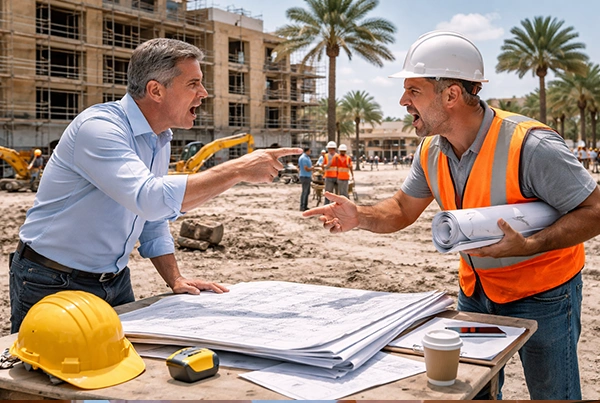
Real-World Examples of Contractor and Owner Disputes
Construction disputes often arise from situations that start small but escalate over time.
Common real-world scenarios include:
- An owner withholds payment due to alleged defects in the work
- A contractor performs additional work without a formal change order, leading to a disagreement over compensation
- Project delays caused by subcontractors result in disputes over responsibility
- Disagreements over materials, specifications, or project scope
- Termination of a contract before project completion
These types of disputes are not uncommon and often require a structured approach to resolution.
Key Dispute Resolution Options
There are several methods available for resolving construction contract disputes. The right approach depends on the nature of the conflict, the terms of the contract, and the goals of the parties involved.
Negotiation
Negotiation is typically the first step in resolving contractor and owner disputes. It involves direct communication between the parties to reach a mutually acceptable solution.
This approach is often the most efficient and cost-effective, especially when both sides are willing to work toward a resolution. Negotiation can also help preserve ongoing relationships, which is particularly important in long-term projects.
However, negotiation may not be effective in situations involving significant financial stakes or deeply conflicting positions. When communication breaks down, other dispute resolution methods may be necessary.
Mediation
Mediation introduces a neutral third party who helps facilitate discussions between the contractor and owner. The mediator does not make a decision but instead guides the parties toward a voluntary agreement.
Mediation is widely used in construction contract dispute resolution because it:
- Encourages collaboration rather than confrontation
- Allows for flexible, creative solutions
- Can be completed relatively quickly
Many construction contracts require mediation before moving to arbitration or litigation. It is often a valuable step in resolving disputes without escalating the conflict.
Arbitration
Arbitration is a more formal process where a neutral arbitrator reviews the evidence and issues a binding decision.
This method is commonly included in construction contracts and is often used as an alternative to litigation. Arbitration can offer:
- Faster resolution than traditional court proceedings
- Greater privacy
- More streamlined procedures
However, arbitration decisions are typically final, with limited opportunities for appeal. This makes it important to understand the implications before proceeding.
Dispute Resolution Boards (DRBs)
Dispute Resolution Boards (DRBs) are commonly used in large or complex construction projects. A DRB consists of neutral experts who are involved throughout the project and help resolve disputes as they arise. Unlike arbitration, DRB recommendations are typically non-binding. If a party does not accept the board’s recommendation, the dispute can proceed to arbitration or litigation for a binding resolution.
Key advantages of DRBs include:
- Early identification of potential issues
- Ongoing oversight during the project
- Faster resolution of disputes before they escalate
While not used in every project, DRBs can be highly effective in minimizing disruptions and preventing larger conflicts.
Litigation
Litigation involves resolving disputes through the court system. Although it is often considered a last resort, litigation may be necessary in certain situations.
Litigation may be appropriate when:
- Significant financial damages are involved
- One party refuses to participate in alternative dispute resolution
- Injunctive relief is needed
- Complex legal issues must be resolved
While litigation can be more time-consuming and costly, it provides a formal process and enforceable outcomes.
Key Considerations in Construction Contract Dispute Resolution
Choosing the right resolution method requires careful evaluation of several important factors.
Contract Review
The construction contract is the foundation of any dispute. Most agreements include specific provisions that dictate how disputes must be handled.
Key elements to review include:
- Dispute resolution clauses
- Notice requirements
- Deadlines for claims
- Scope of work definitions
- Payment terms
Failing to follow contractual procedures can affect your ability to enforce your rights or defend against claims. A thorough review of the contract is essential before taking action. This is something a general business lawyer can assist with.
Documentation
Strong documentation can make a significant difference in the outcome of a construction dispute.
Important records include:
- Contracts and amendments
- Change orders
- Project schedules
- Payment records and invoices
- Emails and communications
- Inspection reports
Maintaining clear and organized documentation throughout the project helps support your position and provides critical evidence if a dispute arises.

Project Stage
The stage of the project can influence both the nature of the dispute and the best resolution strategy.
- Early-stage disputes may be resolved quickly through negotiation
- Mid-project disputes may require structured intervention to avoid delays
- Post-completion disputes often involve payment issues or defect claims
Addressing disputes early can help minimize disruption and reduce overall costs.
How to Choose the Right Dispute Resolution Method
Selecting the appropriate method for resolving a construction dispute depends on several factors.
Key considerations include:
- The urgency of the situation
- The cost of each resolution option
- The importance of preserving the relationship
- The complexity of the dispute
- The requirements outlined in the contract
In many cases, a combination of methods may be used. For example, parties may begin with negotiation, move to mediation, and ultimately proceed to arbitration or litigation if necessary.
Taking a strategic approach can help ensure that the chosen method aligns with both short-term and long-term goals.
Preventing Construction Contract Disputes
While not all disputes can be avoided, proactive steps can significantly reduce the likelihood of conflict.
Best practices include:
- Drafting clear, detailed contracts
- Establishing strong communication protocols
- Documenting all changes and decisions
- Addressing issues early
- Including appropriate dispute resolution provisions
By taking these steps, contractors and owners can reduce risk and improve overall project outcomes.
When Legal Guidance May Be Helpful
Construction disputes can range from relatively minor disagreements to complex conflicts involving significant financial exposure.
Legal guidance may be helpful when:
- A dispute is affecting project progress
- Contract terms are unclear or contested
- Payment issues arise
- Alternative dispute resolution efforts are unsuccessful
- Litigation becomes necessary
Understanding your options early can help you make informed decisions and avoid costly mistakes.
Key Takeaways
Construction contract dispute resolution involves multiple approaches, including negotiation, mediation, arbitration, DRBs, and litigation. Each method has its own advantages and considerations, and the best choice depends on the specific circumstances of the dispute.
By understanding these options and taking a proactive approach, contractors and owners can resolve disputes more efficiently and protect their business interests.