

FAQ: What Is a Tort Claim?
What Is a Tort Claim?
A tort claim is a legal action brought when someone suffers harm because of another party’s wrongful conduct. Unlike contract disputes—which arise from broken agreements—tort claims focus on violations of legal duties that exist regardless of any contract.
In business settings, tort claims often involve allegations such as fraud, misrepresentation, interference with business relationships, negligence, or other conduct that causes financial or reputational harm.
Simply put, tort law exists to hold parties accountable when their actions—or failures to act—cause damage to others.
For businesses, tort claims can arise between competitors, partners, vendors, customers, or third parties. These claims frequently appear alongside contract disputes and can significantly impact operations, finances, and long-term relationships.
Purpose of a Tort Claim
The primary purpose of a tort claim is to compensate the injured party and discourage harmful behavior.
Tort law aims to:
- Restore the injured party financially
- Hold wrongdoers responsible
- Deter similar conduct in the future
- Promote fair and ethical business practices
In commercial matters, tort claims often address conduct that goes beyond simple breach of contract—such as deception, unfair competition, or intentional interference with business opportunities.
Core Elements of a Tort Claim
While the specifics vary depending on the type of tort, most claims must establish several basic elements:

Duty
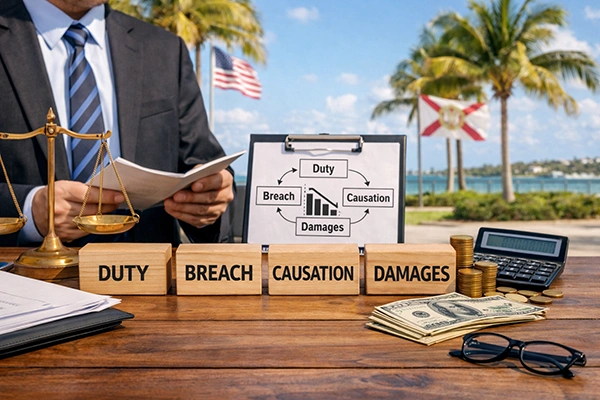
The defendant must have owed a legal duty to the plaintiff. In business contexts, this could include duties of honesty, reasonable care, or fair dealing.
Breach
The defendant must have violated that duty through action or inaction.
Causation
The breach must be directly connected to the harm suffered. In other words, the wrongful conduct must be a substantial factor in causing the damage.
Damages
The plaintiff must show actual harm, such as financial loss, property damage, or reputational injury.
Without measurable damages, a tort claim typically cannot proceed.
Types of Tort Claims
Tort claims generally fall into three main categories: negligence, intentional torts, and strict liability.
Each applies differently in business lawsuits.
Negligence
Negligence occurs when someone fails to act with reasonable care, resulting in harm to another party.
In business disputes, negligence claims may arise from professional errors, careless operations, or failure to follow industry standards.
Key Elements of Negligence
To prove negligence, a plaintiff must establish:
- The defendant owed a duty of care
- That duty was breached
- The breach caused harm
- Actual damages resulted
Business Examples of Negligence
- A consultant providing inaccurate financial advice
- A contractor performing substandard work
- A company failing to safeguard sensitive client data
- Improper maintenance leading to property damage
Negligence claims often involve detailed factual analysis and expert testimony to establish whether reasonable standards were violated.
Intentional Torts

Intentional torts involve deliberate conduct meant to cause harm or interfere with another party’s rights.
These are common in business litigation because they address unfair or deceptive practices.
Common Intentional Business Torts
Fraud or Misrepresentation
Providing false information to induce another party into a transaction.
Tortious Interference
Intentionally disrupting existing contracts or business relationships.
Unfair Competition
Engaging in deceptive practices to gain market advantage.
Breach of Fiduciary Duty
Violating trust-based obligations in partnerships, corporations, or management relationships.
Intentional tort claims often carry higher stakes because they involve purposeful misconduct rather than accidental mistakes.
Strict Liability
Strict liability applies even when a party did not act negligently or intentionally.
If certain activities cause harm, liability may exist simply because of the nature of the activity itself.
In business contexts, strict liability often arises in product-related claims or hazardous operations.
For example, a company may be held liable for defective products even if it exercised reasonable care during manufacturing.
Damages in Tort Claims
Tort damages are designed to compensate the injured party and, in some cases, punish wrongdoing.
Compensatory Damages
These reimburse actual losses, including:
- Lost profits
- Property damage
- Business interruption costs
- Repair expenses
Consequential Damages
These cover indirect losses caused by the wrongful conduct, such as lost clients or delayed projects.
Punitive Damages
In cases involving intentional or egregious misconduct, courts may award punitive damages to deter similar behavior in the future.
Not all cases qualify for punitive damages, but they can substantially increase exposure in serious business tort claims.
Steps to Filing a Tort Claim
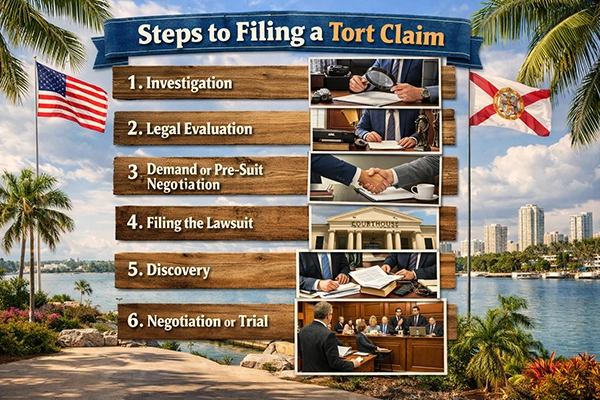
While each case is different, tort claims typically follow a general process:
1. Investigation
Gather documents, communications, financial records, and other evidence showing misconduct and damages.
2. Legal Evaluation
An attorney assesses whether the facts meet legal requirements and identifies applicable tort theories.
3. Demand or Pre-Suit Negotiation
Many disputes begin with formal demand letters or settlement discussions.
4. Filing the Lawsuit
If resolution is not reached, a complaint is filed in civil court outlining the claims.
5. Discovery
Both sides exchange evidence and conduct depositions.
6. Negotiation or Trial
Cases may settle during litigation or proceed to trial for resolution.
Understanding Compensation in Business Tort Claims
Business tort compensation focuses on restoring financial losses and protecting commercial interests.
Unlike personal injury cases, damages often involve complex financial analysis, including:
- Revenue projections
- Lost business opportunities
- Contract impacts
- Market valuation
Accurate documentation and expert input are often critical in proving these claims.
How a Business Lawyer Helps with Tort Claims
Business tort litigation is complex and fact-intensive. An experienced business attorney helps by:
- Evaluating whether conduct rises to the level of a tort
- Identifying all viable claims and defenses
- Gathering financial and documentary evidence
- Coordinating expert analysis when needed
- Managing negotiations and settlement efforts
- Representing clients in court when disputes escalate
For businesses in Clearwater and throughout Florida, having legal guidance early can often prevent minor disputes from becoming costly lawsuits.
Final Thoughts
Tort claims play a major role in business litigation because they address harmful conduct that goes beyond broken contracts. Whether the issue involves negligence, intentional wrongdoing, or strict liability, tort law provides tools to seek accountability and compensation.
Understanding how tort claims work helps business owners recognize risks, protect their interests, and respond strategically when disputes arise.
If your company is facing a business-related tort issue—or you believe another party’s conduct has caused financial harm—speaking with an experienced business attorney can help clarify your options and determine the most effective path forward.